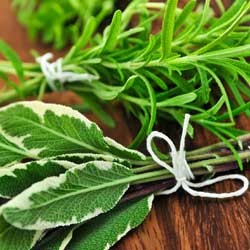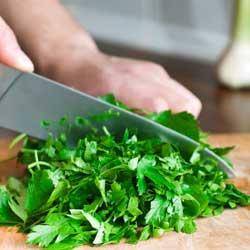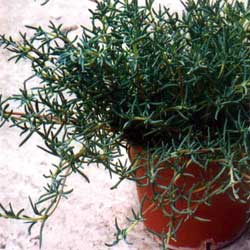


Even though it may be miserable weather outside, you don’t have to be stuck buying overpriced fresh herbs at the store or using less flavorful dried herbs. Why not grow your own inside the house? Most common herbs will grow quite happily in a sunny window at any time year, even when the weather outside is less than garden-friendly.
Where to Grow Your Herbs
Any sunny window can be great for growing indoor herbs, but most people prefer to keep their herbs in the kitchen. After all, it’s probably warm and sunny there. Moreover, think how great it would be to just reach over to your indoor herb garden, take a few snips of this and that, and serve “garden fresh” tasting foods to your family and guests.
Best Indoor Herb Choices
Wondering what herbs will do best indoors? The most popular and easily grown herbs for your kitchen garden include…
| Basil | Oregano |
| Chives | Parsley |
| Lemon Balm | Rosemary |
| Marjoram | Sage |
| Mint | Thyme |
Herbs are great, but don’t overlook edible flowers as well! Pansies, marigolds and nasturtiums grow well inside the house when given sufficient light and add whimsical color and texture to salads and other meals.
Easy Tips for Growing Herbs Indoors
Growing herbs is no different than growing most houseplants. Luckily, herbs aren’t as fussy as many other plants. To grow the best, freshest and most flavorful herbs, consider…
- Light
Brighter is better. South, southwest or western-facing windows should provide a minimum of four hours of sunlight. If none of your windows provides this, you may want to add indoor grow lights to supplement the sunlight your herbs receive. - Soil
Herbs do not require rich soil nor will they do well in heavy soil. Be sure to use a prepackaged potting mix instead of outdoor garden soil that may contain insects and weeds. - Fertilizing
Plan to fertilize more frequently than you would if your herbs were growing outdoors. Fertilize every other week with a weak solution of liquid fertilizer such as Schultz Liquid Plant Food. - Watering
Because some herbs prefer more water than others, it is best to plant different herbs in separate pots. Smaller pots dry out faster and require more frequent watering. Clay pots dry faster than plastic or ceramic. - Drainage
Pots with drainage holes are essential. Use a saucer to catch excess water, but do not let pots sit in standing water. - Harvesting
Snip older leaves to encourage growth and discourage flowering, which can change flavor.
When spring returns, you may find yourself addicted to growing your herbs in pots. Pots contain unruly herbs such as mint and can be decoratively arranged on your deck or balcony while continuing to provide delicious benefits in your cooking. Bon appétit!