

Properly establishing a young tree involves careful attention to roots, soil, and structural support. While tree staking is sometimes necessary, most horticultural experts recommend using stakes only when essential. Unnecessary staking can cause trees to become dependent on external support, which may result in weak trunk development and instability once the stakes are removed.
Why Trees Often Don’t Need Staking
Young trees develop stronger trunks and root systems when allowed to sway slightly in the wind. This natural movement encourages:
- Trunk thickening and strengthening through lignin development.
- Deeper root growth, as the tree anchors itself in response to wind stress.
- Better overall stability, reducing the long-term risk of tipping or breakage.
Because of these benefits, staking should generally be considered a last resort.
When Staking is Necessary
Staking may be appropriate in the following situations:
- Excessive wind exposure – Sites with strong prevailing winds or open fields may prevent a tree from establishing on its own.
- Large bare-root or container-grown trees – Heavier or taller trees that cannot stay upright after planting may benefit from temporary support.
- Soft or uneven soil – Trees planted in sandy or highly loamy soils can lean or shift before roots stabilize.
- Multi-stemmed or top-heavy trees – Trees with a disproportionate canopy-to-root ratio may require staking until roots anchor sufficiently.
Even in these cases, staking should be minimal and temporary, with the goal of encouraging independent stability.
Alternative Methods Before Staking
Before reaching for stakes, try these approaches:
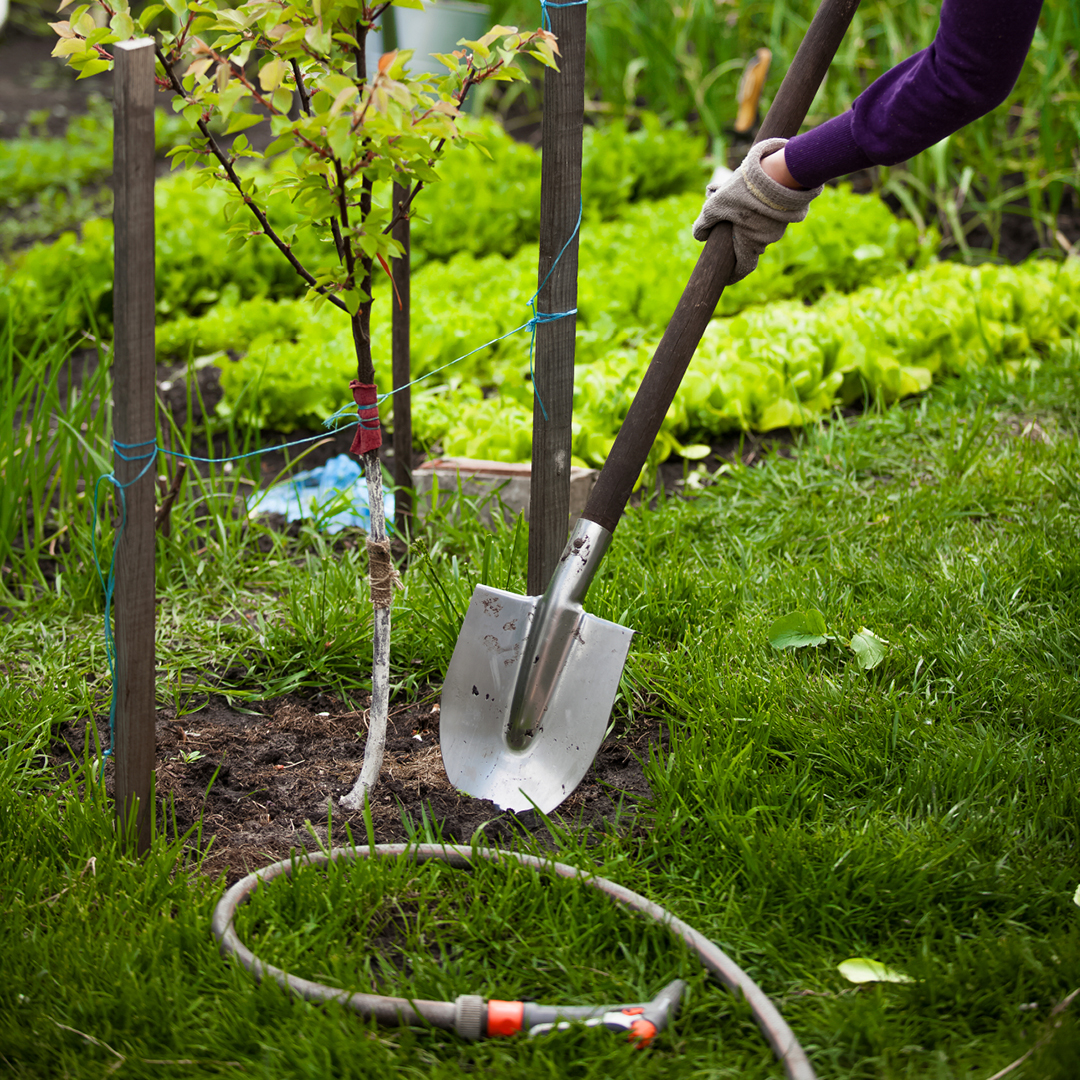
- Proper planting technique – Ensure the tree is upright before backfilling. The soil should be gently but firmly packed around roots to provide initial support.
- Correcting a leaning tree – If a newly planted tree leans, carefully straighten it to its natural upright position. Fill the gap that forms on the side where the trunk was leaning with additional packed soil. This helps stabilize the tree without relying on stakes and encourages the roots to establish in their proper orientation.
- Soil mound support – For bare-root trees, creating a slight mound of soil in the center of the hole can help hold roots in position.
- Windbreaks – Temporary barriers such as burlap screens or shrub buffers can reduce wind pressure on vulnerable trees.
- Selective pruning – Reducing overly dense branches or top-heavy limbs can decrease leverage and improve balance.
How to Stake Properly
If staking is required, follow these best practices:
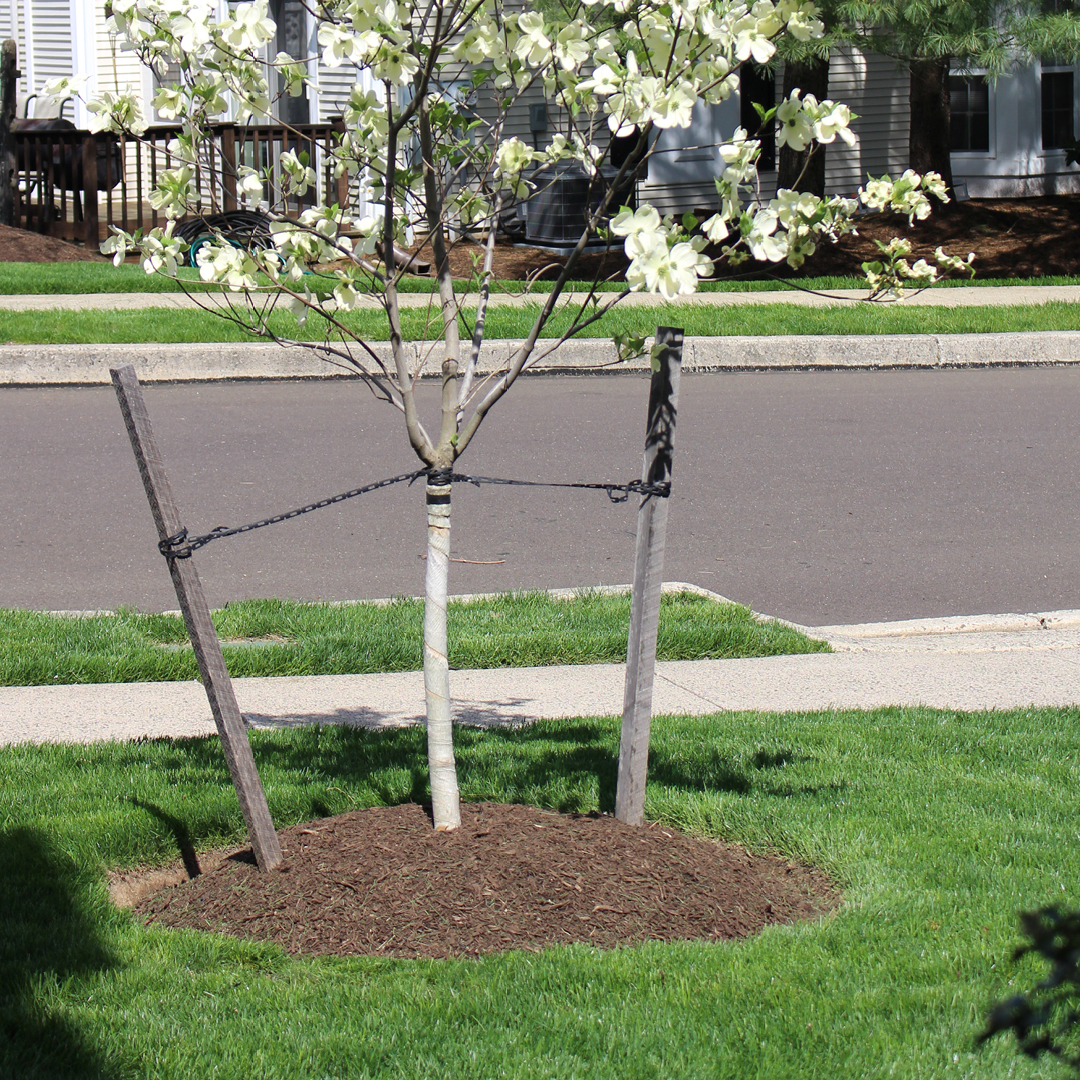
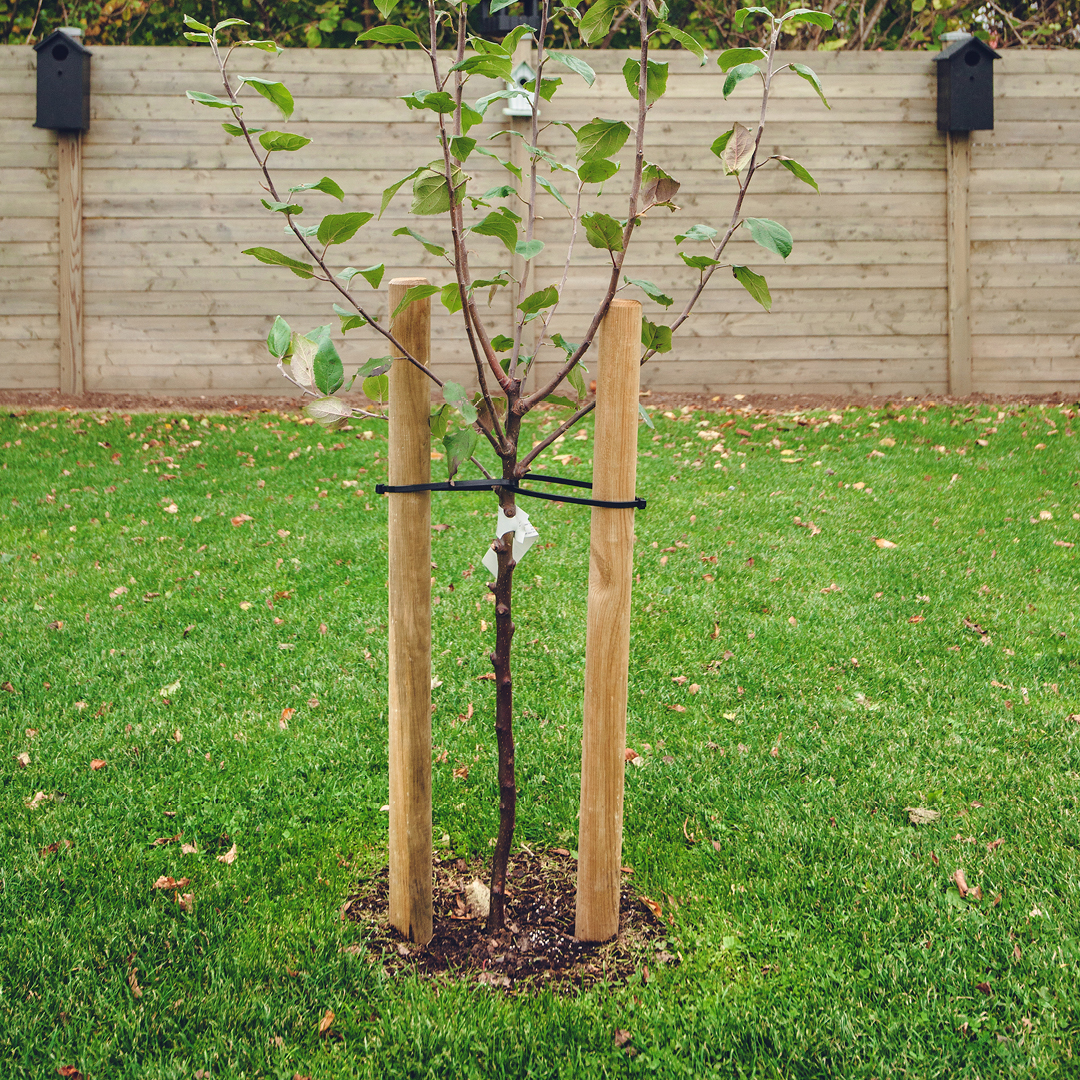
- Use minimal staking material – Typically, two stakes on opposite sides of the tree are sufficient. Avoid encircling the trunk.
- Secure loosely – Use flexible straps or ties that allow some movement. The tree should sway slightly to encourage trunk thickening.
- Check frequently – Inspect stakes and ties monthly to ensure they are not girdling the trunk or damaging bark. Adjust as needed.
- Remove stakes promptly – Stakes should be removed after one growing season or once the tree can stand upright independently, usually within 6–12 months. Leaving stakes too long can cause weak trunk tissue and delayed root development.
Additional Tips for Long-Term Success
- Choose the right staking height – Position ties at one-third the tree’s total height, not higher.
- Monitor the tree after removal – Ensure it remains upright and adjust soil or prune lightly if necessary.
- Avoid over-tightening ties – Trunk constriction can reduce vascular function and cause scarring.
- Combine with mulch and watering – Mulching the base and consistent deep watering helps roots establish faster, often reducing the need for staking altogether.
Final Thoughts
Tree staking, when applied correctly and only when necessary, can help young trees survive challenging conditions. However, the goal should always be to encourage self-supporting growth. Careful planting, strategic pruning, and proper monitoring reduce dependence on stakes, resulting in healthier, structurally sound trees that thrive for years to come.
The team at Sunnyside Gardens can guide you on which trees may need temporary staking, the best materials to use, and proper installation techniques to ensure strong long-term growth.